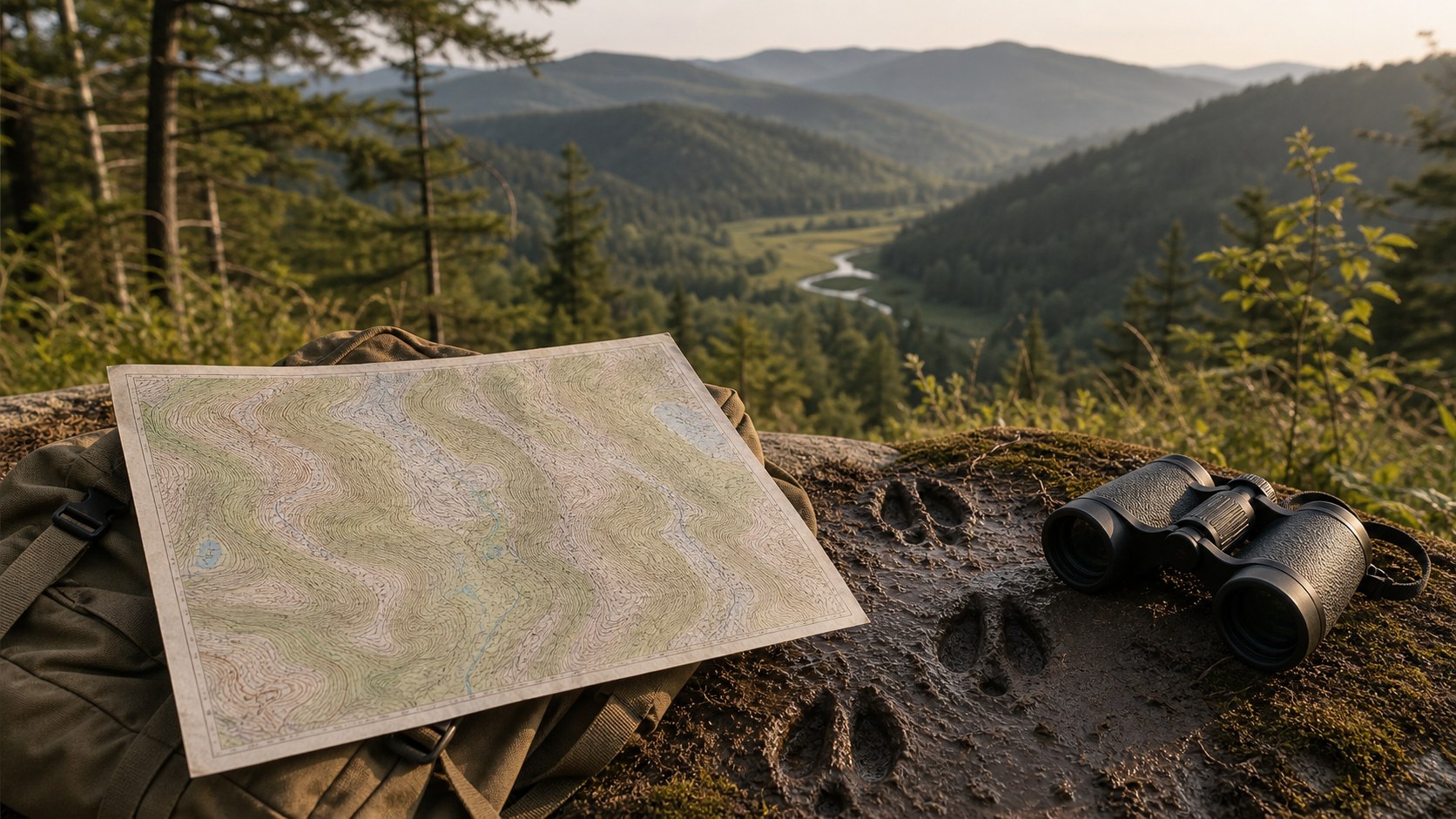
Topographic maps speak a specialized language of symbols, each mark and icon conveying vital information about the Earth’s surface. Unlike road maps, which focus on highways and cities, topo maps aim to capture every nuance of terrain and human intervention. From the broad curves of contour lines to the delicate dots representing individual trees, every element is chosen for clarity and precision. As you learn to decode these symbols, you’ll unlock a deeper appreciation for the landscape’s shape, history, and potential uses. Whether you’re a hiker plotting a new trail, an engineer designing a site plan, or simply a curious explorer, mastering this cartographic lexicon is your first step toward confident navigation and insightful analysis.
Elevation Indicators: Contours, Spot Heights, and Benchmarks
Contour lines reign supreme on topographic maps, linking points of equal elevation to render the three-dimensional world flat. Each line’s spacing reveals slope steepness: widely spaced lines signal gentle inclines, while tight clusters indicate dramatic cliffs. Interspersed among these ribbons of elevation are spot heights—precise points marked with an elevation value—and benchmarks, which represent highly accurate survey stations. Spot heights often denote hilltops or saddles, giving you exact elevation data when contour intervals might only approximate. Benchmarks, sometimes marked with a tiny triangle or a cross, anchor your measurements to official geodetic networks. Together, contours, spot heights, and benchmarks weave a vertical tapestry that informs everything from trail planning to flood risk assessment.
Water Features: Streams, Lakes, Swamps, and Springs
Water shapes landscapes in profound ways, and topographic maps capture its presence through a distinct set of blue symbols. Solid lines trace perennial streams that flow year-round, while dashed or dotted lines often indicate intermittent waterways that swell only during rains. Lakes and ponds appear as filled shapes, their outlines precisely defined to reveal shoreline complexity. Swamps and marshes are shown with clustered dash-and-dot patterns, hinting at soggy ground and variable depth. Springs, the points where groundwater reaches the surface, may be marked by a blue circle with wavy lines. Recognizing these symbols is crucial for outdoor adventurers seeking reliable water sources, as well as for land managers mitigating erosion and managing wetlands.
Vegetation and Land Cover Symbols: Forests, Orchards, and Scrublands
Green on a topographic map signals life—dense forests, orchards, and areas of scattered trees or scrub. Solid green shading typically represents continuous woodland, while green dots or tree symbols may map orchards or individual standout specimens. Open areas with sparse vegetation remain unshaded, letting underlying contour lines shine. Special hatching or stippling can denote scrubland or transitional brush areas that influence hiking difficulty and wildlife habitat. For ecologists and foresters, these symbols offer a bird’s-eye view of ecosystem distribution. Hikers and hunters use them to plan routes around thick undergrowth, while landowners rely on this information to strategize reforestation or controlled burns.
Man-Made Structures: Roads, Railways, Bridges, and Buildings
The imprint of human activity is mapped through a diverse library of symbols. Major highways appear as bold red or black lines, secondary roads as thinner lines, and minor tracks or footpaths as dashed lines. Railways cut across the map with parallel lines intersected by short ticks, sometimes accompanied by tiny icons for stations. Bridges are often indicated where a road or track crosses a waterway, sometimes annotated with a pillar symbol. Buildings—both solitary farmhouses and clustered urban blocks—are shown as small black squares or rectangles, their size roughly proportional to their real-world footprint. Recognizing these symbols helps travelers identify rest stops and services, while urban planners integrate topo data with cadastral information for zoning and infrastructure design.
Boundaries and Administrative Lines: Political, Park, and Property Delimitations
Lines on a topographic map do more than trace terrain; they delineate jurisdictional and land-use boundaries. Political boundaries—state, county, or national borders—are often drawn as bold dashed lines, sometimes with accompanying labels. Park and protected-area perimeters appear in green or brown dashed outlines, guiding resource managers and backcountry visitors alike. Land ownership or property parcel lines, if included, may be shown as faint, thin lines that require careful scrutiny. Understanding these boundaries is essential for developers, surveyors, and outdoor enthusiasts to respect private lands, comply with regulations, and plan routes that avoid restricted zones.
Relief Representation: Hachures, Shaded Relief, and Hillshade
Beyond contour lines, cartographers sometimes employ additional techniques to accentuate relief. Hachures are short lines drawn perpendicular to contour lines on steep slopes, creating a textured look that emphasizes rugged terrain. Modern maps frequently incorporate shaded relief—subtle gray-scale shading that simulates sunlight casting shadows across the landscape. This hillshade effect offers a more intuitive, three-dimensional impression of topography, particularly when printed in color or viewed on a digital platform. While hachures and hillshade techniques differ in style, they both enhance the readability of complex terrain, guiding engineers, architects, and outdoor adventurers to quickly assess landform challenges.
Special Features: Mines, Quarries, and Ruins
Topographic maps often mark unusual or historical features that impact land use and safety. Mines and quarries appear as crossed hachure pits or labeled polygons, alerting explorers to steep pits, unstable ground, or potential hazards. Ruins, such as abandoned buildings or historic earthworks, may be denoted by small dashed outlines or unique symbols that hint at cultural significance. Archeologists, geologists, and industrial heritage enthusiasts scan topo maps for these markers to plan field surveys, study resource extraction history, or ensure personal safety. Even recreational users benefit: a hidden cave entrance might be flagged, offering an unexpected adventure for speleologists.
Points of Reference: Survey Marks, Triangulation Stations, and Azimuth Markers
Accurate positioning has always been vital in mapmaking, and topographic maps display a network of reference points to assist in precise navigation. Triangulation stations—pillared survey markers established by national mapping agencies—are marked by small triangles with elevation labels. Azimuth markers, which indicate directions to prominent peaks or landmarks, may be represented with arrows and degree values. Some maps also include GPS control points or benchmarks labeled “BM” alongside their surveyed height. By locating these fixed points, surveyors calibrate their instruments, and hikers confirm their exact position, even in featureless expanses like high plateaus or dense forests.
Trails, Paths, and Transportation Routes: From Footpaths to Highways
While roads dominate road maps, topographic maps cater to foot traffic and off-road adventures by detailing trails, bridleways, and minor tracks. These are often depicted as thin dashed or dotted lines, sometimes with symbols indicating difficulty, seasonality, or permitted uses. Mountain-biking trails, for instance, might have a unique marker, while winter routes—ski or snowmobile trails—carry another. In national parks and protected areas, interpretive trails with viewpoints and rest areas may be annotated. For backcountry travelers, recognizing these routes on a topo map is critical for planning safe, enjoyable journeys that account for terrain difficulty and legal access.
Utilities and Infrastructure: Powerlines, Pipelines, and Communication Towers
Invisible yet essential, utilities crisscross landscapes and appear subtly on topographic maps. Powerlines are shown as paired dashed lines with small towers at intervals, while pipelines may be indicated by single dashed lines with tiny symbols. Communication towers and antennas—important for emergency planning and outdoor connectivity—are marked by a circle with radiating lines or a distinctive icon. Engineers and land managers rely on these symbols to coordinate maintenance, plan new infrastructure with minimal ecological impact, and avoid interference. Outdoor enthusiasts use them to orient themselves when terrain features are obscured by forests or weather.
Interpreting Vegetation Density and Land Use Patterns
Beyond simple green shading, topographic maps often employ specialized patterns to denote different land uses. Cultivated fields may appear as light brown or beige patches with aligned rows, while vineyards carry a lined pattern suggesting trellises. Orchards, olive groves, and palm plantations each have distinct dot-and-line motifs. Grassland and meadows are represented with sparse green speckles. These detailed land-use symbols guide agricultural planners assessing crop distribution, conservationists mapping habitats, and travelers seeking scenic viewpoints across open fields or vineyards.
Contour Supplementation: Dashed and Form-Line Elevation Marks
In areas where subtle rises and depressions fall below the main contour interval, supplementary or form-line contours provide extra nuance. These are often shown as fine, dashed lines, representing half the standard interval and highlighting minor knolls or shallow depressions. Even if these lines are unlabeled, their presence enriches your mental image of rolling terrain, helping you spot gentle saddles or shallow hollows that might escape notice on coarser maps. For wilderness guides and trail builders, these minor features can mean the difference between an ergonomic campsite and an awkward sleeping spot.
Integrating Symbol Mastery into Field Practice
Recognizing map symbols in theory is one thing; translating them into real-world landmarks is another. A vital step is field validation: layer your topo map over a GPS-enabled device or pair it with a camera, then match symbols—like contour pinnacles or stream junctions—to actual terrain features. Over time, your visual memory sharpens, and the once-abstract symbols spring to life in the form of rocky outcrops, forest clearings, and weathered fence lines. This synthesis of map and terrain transforms you into a confident navigator, able to anticipate ground conditions and respond to unexpected challenges.
The Enduring Value of Topographic Symbols
In an era of instantaneous digital mapping, the curated symbol set of a traditional topographic map remains indispensable. Symbols condense vast amounts of data into interpretable visuals, withstand technological failures, and offer a tactile sense of place that screens cannot replicate. By mastering these icons—from the graceful sweep of contour lines to the precise dot of a spring—you gain a richer, more nuanced connection to the landscape. Whether you’re planning a mountain expedition, designing a sustainable development, or simply exploring your local park, the language of topo symbols is your gateway to understanding and respecting the world’s varied terrains.