Maps have long been humanity’s window onto the world, charting seas, guiding caravans, and unveiling uncharted territories. In today’s age of GPS apps and satellite imagery, printed maps still hold a unique power—each type tailored to a specific purpose and audience. Two of the most ubiquitous paper maps are topographic maps and road maps. At first glance, both may look like a web of lines, symbols, and labels, but their design philosophies, intended use cases, and information density diverge dramatically. By understanding the key differences between these map types, you can select the right tool for your adventure, planning, or professional project.
Understanding Map Objectives and Audiences
Every map is crafted with a mission. Road maps are optimized for drivers, offering clear depictions of highways, secondary roads, and points of interest such as gas stations and rest areas. They favor simplicity and readability at highway speeds, emphasizing navigational cues over subtle landscape details. Topographic maps, on the other hand, serve hikers, engineers, and geologists who require precise terrain information. They translate the three-dimensional world onto paper by using contour lines to indicate elevation changes, revealing ridgelines, valleys, and slopes. Recognizing each map type’s intended audience is the first step toward unlocking its full potential.
Visual Language: Symbols, Color, and Styling
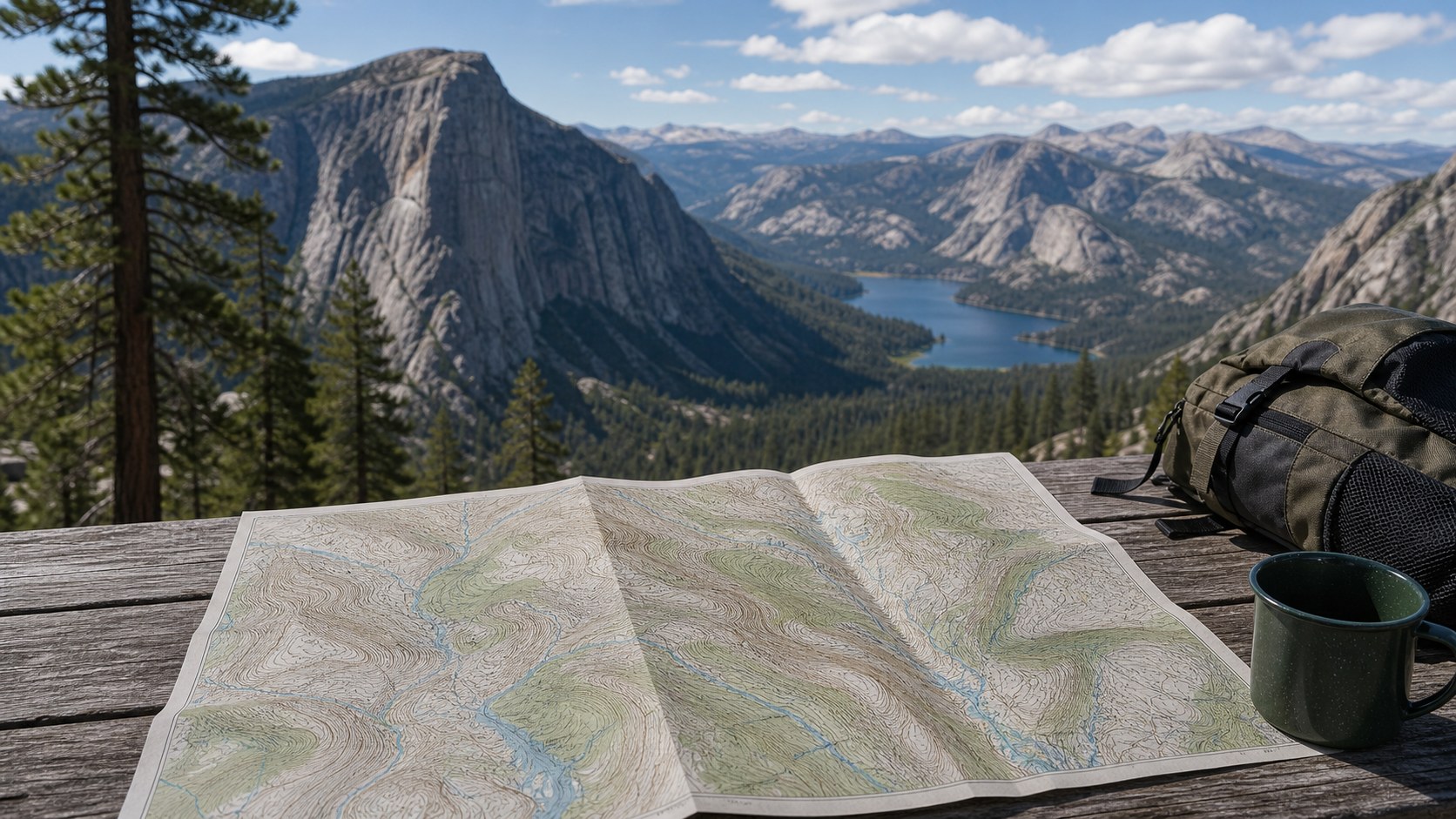
Color choices and symbols are the vocabulary of cartography. Road maps use broad swaths of pastel yellows, greens, and blues to denote different road classes, land cover, and water bodies. Highway shields and route numbers dominate the legend, while icons such as fuel pumps, picnic tables, and camping symbols inform travelers at a glance. In contrast, topographic maps employ a more muted palette—often greens for vegetation, whites for open land, and blues for water—overlaid with brown contour lines that flow like rivers across the page. Spot elevation markers, benchmark triangles, and fine dashed lines for trails or minor features convey intricate landscape details. This specialized styling allows map readers to differentiate between two divergent worlds: the accelerated pace of road travel and the deliberate study of terrain.
Scale and Detail: Granularity Matters
A map’s scale determines how much ground fits on the page and how much detail is visible. Road maps typically use a small scale—such as 1:250,000 or smaller—so that large regions can be shown on a single sheet. This broad view is ideal for planning cross-country routes or understanding major highway networks but sacrifices localized detail. Topographic maps often have larger scales, like 1:24,000 in the United States or 1:25,000 in Europe, offering a granular portrayal of every hill, stream, and boulder. With each contour line representing a fixed elevation interval—commonly 10 or 20 feet—readers can calculate precise elevation gains and assess slope steepness for safe expedition planning. The choice between wide-area coverage and detailed terrain representation hinges on the user’s priorities.
Purpose-Driven Content: Navigation vs. Exploration
Road maps streamline point-to-point navigation: you locate your starting city, trace the highway routes that connect to your destination, and identify services along the way. Their linear focus helps drivers answer questions like, “Where is the nearest exit?” or “Which turn-off leads to the interstate?” Topographic maps, however, invite exploration of the landscape itself. Hikers and backcountry travelers rely on these maps to gauge whether a ridge can be crossed or a valley descended, to identify water sources tucked in hidden hollows, and to choose campsites on level benches. In professional contexts, engineers use topographic contours to design drainage systems, while environmental scientists analyze watershed boundaries. Each map type excels in its domain: road maps guide movement from place to place, topographic maps illuminate the lay of the land.
Designing for Clarity: Simplicity vs. Complexity
Cartographers balance clarity and complexity according to the map’s mission. On a road map, clarity is paramount—drivers have seconds to discern which colored line represents the state highway versus a local road. Thus, the map minimizes extraneous detail, grouping smaller roads into simple classes and sacrificing elevation data altogether. In stark contrast, a topographic map thrives on complexity. Every contour bend, spur, and saddle is plotted, requiring a dense network of lines that can overwhelm the untrained eye. Yet, through consistent design conventions—index contours in bold with labelled elevations, intermediate lines in finer strokes—cartographers ensure that even intricate terrain remains decipherable with study. The trade-off between simplicity and detail underscores each map’s unique purpose.
Contouring the Earth: Elevation and Relief
The hallmark of topographic maps is the contour line, which connects points of equal elevation to sketch a three-dimensional landscape in two dimensions. The spacing and shape of these lines reveal steep cliffs, rolling hills, and flat plains with startling accuracy. In road maps, elevation is seldom a concern; gentle grade changes are rarely plotted, and drivers assume that routes have been engineered for manageable slopes. Topographic map readers, however, interpret every subtle rise and fall—for them, a contour line is as critical as a road segment in planning a safe journey. Understanding relief through contour patterns transforms a map into a dynamic terrain model, informing decisions from trail difficulty to infrastructure design.
Symbol Libraries: Decoding Map Icons
Both map types rely on symbol libraries, but their contents differ to serve distinct user needs. Road maps present services—restrooms, food, lodgings, parks—as readily recognizable icons, supplemented by city boundary shading and grid references for quick orientation. Topographic maps incorporate symbols for natural and man-made features: marshes, cliffs, mines, powerlines, and even forest density represented through green shading. Trails, logging roads, and minor tracks appear alongside foot bridges and spring locations. Learning to decode the appropriate symbol set is akin to mastering a new language; misinterpreting an icon can turn a straightforward road trip into a detour, or a promising hiking route into an impassable obstacle.
Practical Applications: Choosing the Right Tool
Deciding which map to use depends entirely on your objective. A cross-country driver plotting a multi-state journey needs a road map’s big-picture overview and service guides. An off-road cyclist traversing remote trails requires topographic detail to identify elevation profiles and water sources. City planners might overlay road and topographic data to optimize transportation corridors while minimizing environmental impact. Even emergency responders fuse both map styles—using road maps for rapid dispatch and topographic maps to strategize rescue operations in rugged terrain. In every case, understanding each map’s strengths ensures that the right cartographic lens is applied to the task at hand.
Digital Integration: Blurring the Lines
The rise of digital mapping platforms has muddied the once-clear distinction between map types. Many smartphone apps allow users to switch between “road view” and “terrain view,” blending satellite imagery with contour overlays. GPS units designed for outdoor use integrate built-in topographic datasets, while automotive navigation systems occasionally offer elevation profiles for hill-climbing routes. Yet despite technological convergence, printed maps retain their value—paper versions neither drain batteries nor depend on cell service. They foster a tactile engagement with the landscape that digital screens cannot fully replicate. Embracing both analog and digital resources empowers map users to harness the best of each.
Hybrid Mapping: The Best of Both Worlds
Innovative cartographers have long experimented with hybrid map products that meld the navigational simplicity of road maps with the topographic depth of contour maps. These offerings often feature fold-out sections: one panel for highways and services, another for detailed terrain around popular outdoor destinations. Publishers sometimes embed contour shading or hillshade effects directly into road maps to indicate general elevation trends without overwhelming drivers with dense contour lines. While these hybrids may not satisfy hardcore off-road adventurers or professional surveyors, they excel for recreational travelers who venture beyond paved roads but still crave user-friendly navigation.
Map Literacy: Skills for the Modern Explorer
Beyond selecting the right map, cultivating map literacy is essential. For road maps, this means quickly identifying route numbers, exit points, and scale bars before glancing back at the windshield. For topographic maps, it involves interpreting contour intervals, visualizing elevation profiles, and cross-referencing symbols. Workshops, online tutorials, and field exercises sharpen these skills, transforming map readers into confident navigators. As GPS technology advances, the ability to read and trust your own map judgment remains an invaluable backup should devices fail or data become outdated.
Preserving Cartographic Heritage
While digital mapping grows ever more pervasive, stand-alone paper maps embody centuries of cartographic heritage. Road maps recall the golden era of American highway travel, where families unfolded oversized sheets on station wagons to chart coast-to-coast adventures. Topographic quadrangles, meticulously surveyed by national mapping agencies, represent national efforts to chart every crest and canyon. Preserving these traditions—by teaching map-reading in schools, supporting map libraries, and celebrating cartographic art—ensures that future generations appreciate the blend of science and artistry that underpins every contour line and highway diagram.
Charting Your Course with Confidence
When the moment arises to plan a journey—be it across bustling highways or along remote ridgelines—knowing which map to turn to is a vital first step. Road maps wield the power of simplicity, guiding drivers along numbered routes and toward essential services. Topographic maps look into the earth’s undulations, offering precise elevation data and terrain analysis. Whether printed or digital, each map type equips you with the insights needed to navigate safely and efficiently. By understanding their differences and learning to read both with confidence, you equip yourself for any expedition, from city streets to untamed wilderness.