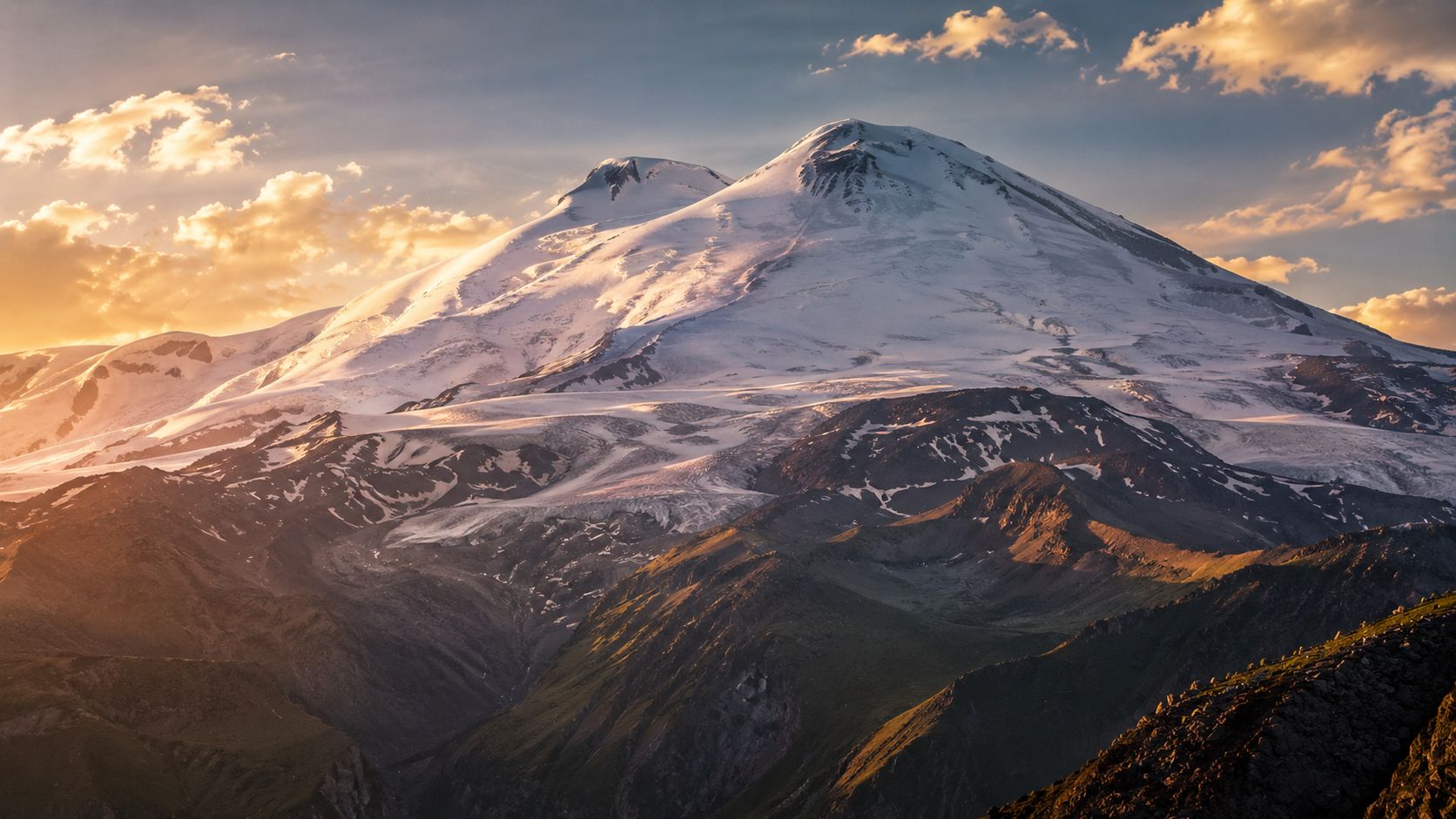
The Pyrenees rise sharply between France and Spain, forming one of Europe’s most striking and storied natural borders. Stretching nearly 270 miles from the Atlantic Ocean to the Mediterranean Sea, this formidable mountain chain has shaped political boundaries, cultural identities, migration paths, and ecological worlds for millennia. Unlike many other ranges that separate nations, the Pyrenees have never been merely a wall—they have been a living, dynamic region where cultures meet, where ancient traditions endure, and where landscapes blend rugged power with serene beauty. For centuries, shepherds, merchants, monks, explorers, rebels, and kings have crossed these peaks, leaving behind a tapestry of stories etched into valleys, passes, and ridgelines. The Pyrenees inspire awe not only for their dramatic summits and glacial lakes but also for their role in shaping the relationships between two major European nations. They have stood as both protective barrier and shared space, influencing diplomacy, trade, warfare, and settlement patterns. Today, the Pyrenees remain a place where nature and culture coexist in a delicate balance. From snow-covered peaks to lush valleys, from ancient monasteries to traditional stone villages, they offer a vivid reminder of how mountains can define a continent’s character. This is the story of a mountain range that continues to shape geography, identity, and the spirit of adventure across France and Spain.
A Landscape Forged by Earth’s Deep Forces
The Pyrenees owe their existence to colossal geological processes that began more than 100 million years ago. Their formation is rooted in the collision between the Iberian and Eurasian tectonic plates—an immense, slow-motion impact that forced the Earth’s crust upward, creating towering ridges and dramatic valleys. Over millions of years, erosion, glaciation, volcanic intrusions, and tectonic uplift sculpted the landscape into its present form. Unlike the Alps, which are younger and more sharply defined, the Pyrenees possess a ruggedness that speaks to their unique geological evolution. Granite massifs dominate the central regions, while limestone cliffs and karst formations appear along the foothills.
Sharp peaks like Aneto, Pic du Midi d’Ossau, and Vignemale rise above surrounding valleys, creating iconic silhouettes recognizable to mountaineers across Europe. Ancient glaciers carved deep basins that filled with crystal-clear lakes, forming some of the most stunning alpine scenery in the world. The range’s geological composition also contributes to its extraordinary biodiversity. Soils vary widely, nurturing ecosystems that shift dramatically with elevation. The Pyrenees serve as a natural corridor between Europe’s Atlantic and Mediterranean biomes, creating a hotspot of biological diversity.
Water plays a central role in shaping the landscape as well. The Pyrenees act as a watershed dividing major river systems, sending water north into France and south into Spain. The springs, waterfalls, and rushing streams contribute not only to the region’s beauty but also to its agricultural vitality and hydrological importance. This fusion of geology and ecology makes the Pyrenees a living laboratory—an evolving masterpiece sculpted by the forces of Earth itself.
A Line Between Nations—but Not Between Cultures
While the Pyrenees mark the political border between France and Spain, they have never fully separated the cultures of the people who inhabit them. In fact, the mountains often blur distinctions rather than enforce them. Over centuries, shared traditions, trade, and migration created a network of cultural bridges that span the peaks. One of the most notable examples is the Basque people, whose homeland straddles both sides of the western Pyrenees. Their ancient language, Euskara, is unrelated to any other language in Europe, and their traditions, music, dance, and cuisine flourish on both sides of the border. Catalonia also extends across the mountains, linking Spanish Catalans with their French counterparts in the region known as Northern Catalonia. The influence of Catalan language, architecture, and festivals is visible throughout the eastern Pyrenees. In the central and eastern sections, pastoral communities practiced transhumance—seasonal livestock migration—moving sheep and cattle across the mountains long before national borders existed. These routes fostered cultural exchange and economic cooperation, weaving connections between valleys that remain alive today. Over the centuries, political borders shifted with wars, treaties, and dynastic changes. The Treaty of the Pyrenees in 1659 formally established much of the present boundary, dividing territories between France and Spain. Yet daily life often remained unchanged, with communities continuing to trade, marry, and celebrate across the border. Even today, many Pyrenees residents speak multiple languages—French, Spanish, Catalan, Occitan, Aragonese, or Basque—reflecting a cultural mosaic far richer than a simple line on a map. The Pyrenees remind us that mountains may divide landscapes, but they cannot easily divide the human spirit.
Landscapes of Legends, Faith, and Ancient Footsteps
The Pyrenees are steeped in myth, legend, and spiritual significance. For thousands of years, humans have ventured through these valleys, leaving behind stories that intertwine with the mountains’ dramatic environments. Ancient myths describe the Pyrenees as the resting place of Pyrene, a tragic figure whose name was immortalized in the peaks after Hercules laid her to rest beneath towering stones. Folklore across the region speaks of giants, enchanted forests, and supernatural guardians who roam the highlands. The mountains have also served as a sacred backdrop for religious traditions. Medieval pilgrims traveling the Camino de Santiago crossed the Pyrenees at Roncesvalles, a path that remains one of the most iconic stretches of the pilgrimage route. Roncesvalles itself is famous for the legendary Battle of Roncevaux Pass, where Roland, hero of the epic Song of Roland, fell in combat—an event immortalized in medieval literature. Ancient hermitages, monasteries, and chapels cling to cliffs and nestle in valleys, testifying to centuries of spiritual devotion. The Monastery of San Juan de la Peña in Spain and the Abbey of Saint-Martín-du-Canigou in France stand as remarkable examples of religious life shaped by the mountains’ solitude and majesty. Beyond myth and faith, the Pyrenees contain archaeological traces of prehistoric life. Caves in the region house Paleolithic art, tools, and remnants of early human settlements. The Grotte de Niaux and Grotte de Bédeilhac, for example, preserve intricate cave paintings that reveal the deep connection between humans and these landscapes over tens of thousands of years. The Pyrenees are not just mountains—they are living chronicles of human history, memory, and imagination.
A Refuge of Wildlife and Wild Beauty
The Pyrenees harbors one of the richest arrays of flora and fauna in Europe, largely thanks to its diverse climates, altitudinal zones, and relatively untouched wilderness. The range forms a natural bridge between two major European ecosystems: the temperate Atlantic zone to the west and the Mediterranean zone to the east. This intersection creates a mosaic of habitats—from dense beech forests to high alpine meadows and glacial cirques. Wildlife thrives in this complexity. The iconic Pyrenean chamois, known locally as the izard, bounds effortlessly across steep cliffs, while the Pyrenean desman—a rare semi-aquatic mammal—navigates mountain streams with its elongated snout. The range also shelters lammergeiers, or bearded vultures, with their impressive wingspans and bone-dropping feeding habits.
Brown bears once roamed extensively across the Pyrenees, and although their numbers dwindled in the 20th century, reintroduction efforts have helped stabilize the population in recent years. The forests echo with the calls of black woodpeckers, capercaillies, and golden eagles. Botanically, the Pyrenees host hundreds of endemic plant species, including delicate saxifrages, alpine lilies, and rare orchids adapted to harsh, high-altitude environments. Seasonal changes add to the region’s charm. Spring brings carpets of wildflowers, summer opens lush green valleys for grazing, autumn paints forests in rich golds and reds, and winter blankets the peaks in silence and snow. The Pyrenees serve as a vital refuge for biodiversity in a world where wild spaces are rapidly disappearing. Conservation efforts in national parks such as Ordesa y Monte Perdido in Spain and Pyrénées National Park in France help preserve these natural treasures for future generations.
Human Pathways Through the Mountains
For millennia, the Pyrenees have served as both obstacle and gateway, shaping migrations, wars, trade routes, and political transformations. Their rugged terrain has alternately protected and challenged civilizations on either side. During ancient times, the Pyrenees acted as a barrier for invading armies, though not an impenetrable one. Romans, Moors, Visigoths, and Franks all navigated the mountains in their expansions and retreats. Numerous passes—such as Somport, Bielsa, and Roncesvalles—became strategic transit points where history unfolded again and again. In the Middle Ages, merchants carried goods such as wool, salt, spices, and metals across the range, linking Mediterranean and Atlantic markets. These routes fostered cultural exchange and economic interdependence that continued long after national borders solidified. The mountains have also served as a refuge during times of conflict. During the Spanish Civil War, thousands of refugees crossed the Pyrenees to escape violence, forging paths through harsh terrain in search of safety.
During World War II, the Pyrenees became a lifeline for resistance fighters, Jewish families, and Allied pilots fleeing Nazi-occupied territories. Smugglers and guides risked their lives to help travelers pass through snow, storms, and patrols. Today, the Pyrenees draw hikers from around the world along famous long-distance trails such as the GR10 in France, the GR11 in Spain, and the high-altitude Pyrenean Haute Route. These footpaths follow ancient tracks once used by shepherds, traders, and migrants. Through them, modern adventurers trace the historical footsteps of generations who crossed the mountains before them. The Pyrenees, with their web of passes, valleys, and trails, stand as a testament to human endurance and movement across time.
A Mountain World of Adventure and Discovery
The Pyrenees today offer endless opportunities for exploration, blending natural beauty with outdoor recreation in ways few regions can match. Hikers traverse vast alpine landscapes, moving from grassy pastures to rocky ridges and glacial lakes. Cyclists challenge themselves on steep climbs that have become legendary through the Tour de France. Mountaineers ascend technical summits like Vignemale or Monte Perdido, testing their skills against rugged rock and unpredictable weather. In winter, ski resorts such as Baqueira-Beret, Cauterets, and Andorra’s Grandvalira attract visitors seeking world-class alpine and nordic skiing. The varied terrain ensures something for everyone—from gentle snowshoe routes to steep, powder-filled couloirs. Adventure doesn’t stop with the slopes.
The Pyrenees also offer canyoning, paragliding, caving, rock climbing, rafting, and wildlife photography. Lake-dotted valleys and hidden waterfalls reward those who venture off the beaten path. Villages nestled within these mountain landscapes provide cultural enrichment that elevates the experience. Stone houses with slate roofs, Romanesque churches, local markets, and traditional festivals offer glimpses into mountain life that blend ancient and modern influences. Culinary traditions highlight the region’s pastures, livestock, and hardy crops. Cheeses like Ossau-Iraty and Toma de Aragon, hearty stews, mountain honey, and cured meats reflect the Pyrenees’ agricultural heritage. The Pyrenees are a world where nature and adventure converge, where people come not only to challenge themselves physically but to immerse themselves in landscapes that leave lasting impressions. Whether exploring a quiet valley or tackling a high-altitude route, travelers engage with a mountain range that invites discovery at every turn.
A Border That Connects as Much as It Divides
The Pyrenees stand as far more than the political boundary between France and Spain. They are a region of shared heritage, ecological wonder, ancient history, and modern exploration. These mountains have shaped cultures on both sides, nourished civilizations, and offered sanctuary during humanity’s darkest hours. They have guided travelers, inspired legends, and framed the landscapes of southwestern Europe with timeless grandeur. As a natural border, the Pyrenees embody both separation and connection. Their peaks rise as markers of sovereignty, yet the valleys between them reveal the intertwined destinies of the people who call the region home. The mountains foster cooperation through trade, cultural exchange, tourism, and conservation. They remind us that borders drawn on maps cannot capture the complexity of landscapes shaped by millions of years of geological evolution and thousands of years of human presence. Today, the Pyrenees remain a testament to the resilience and beauty of mountain regions. They invite us to explore, to understand, and to appreciate the interplay between nature and civilization. The story of the Pyrenees is not merely a story of division—it is a story of unity forged by the power of the mountains themselves.