
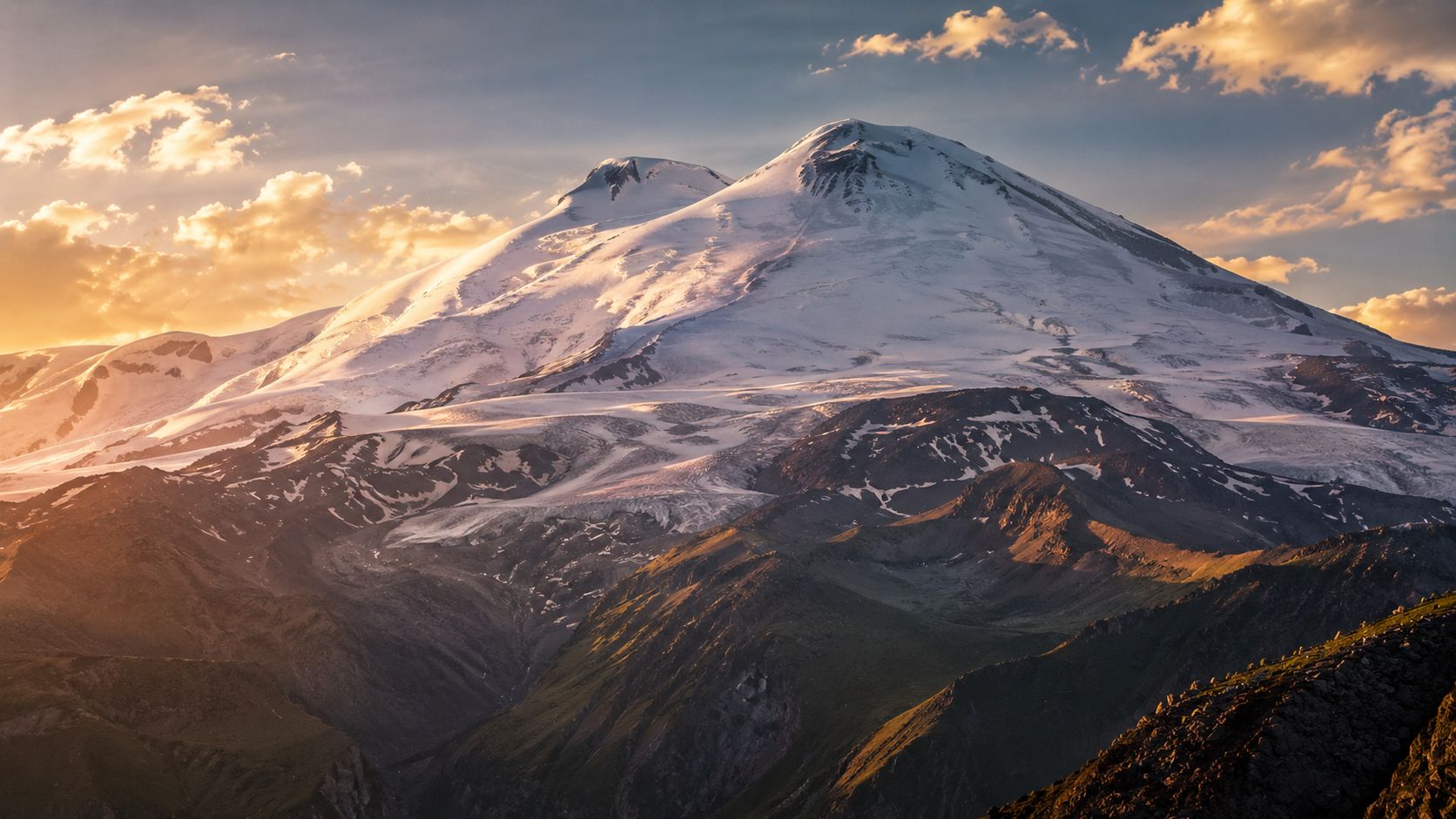
Towering high above the rugged wilderness of the Caucasus Mountains, Mount Elbrus rises like a frozen titan watching over the boundary between Europe and Asia. Standing at an astonishing 18,510 feet above sea level, this massive volcanic peak claims the title of Europe’s highest mountain, surpassing even the legendary Alps and the iconic Matterhorn. Yet despite its immense stature and global significance, Mount Elbrus remains one of the world’s most underrated mountain destinations. For decades, the spotlight of European mountaineering has often focused on the Swiss Alps, Mont Blanc, and other famous summits. Meanwhile, Elbrus has quietly remained a hidden gem tucked within southern Russia’s dramatic Caucasus region. Here, glaciers spill across volcanic slopes, alpine valleys stretch endlessly beneath snow-covered ridges, and ancient cultures thrive beneath one of the most powerful landscapes on Earth.
The Volcanic Origins of Europe’s Highest Summit
Unlike many of Europe’s famous jagged mountain peaks, Mount Elbrus is actually a dormant volcano. Its enormous twin summits were formed through volcanic activity millions of years ago, gradually building one of the largest volcanic structures on the Eurasian continent. Today, its snow-covered dome conceals the fiery geological forces that once shaped the landscape.
The mountain contains two primary summits, with the western summit being slightly taller than the eastern one. Both are permanently covered in ice and snow, feeding vast glacier systems that extend across the surrounding terrain. More than twenty glaciers descend from Elbrus, supplying rivers and freshwater resources throughout the region.
Geographically, Elbrus sits within the western Caucasus Mountains, a colossal range stretching between the Black Sea and the Caspian Sea. This region forms one of the most dramatic natural barriers in the world and has historically marked the boundary between Europe and Asia. Because of this location, Mount Elbrus holds a unique geographical distinction. Many mountaineers and geographers recognize it as Europe’s highest point, making it one of the coveted Seven Summits — the tallest mountains on each continent.
The sheer scale of Elbrus becomes especially apparent from a distance. Its immense snowy mass dominates the horizon, often visible from dozens of miles away. Unlike sharp alpine peaks that appear aggressive and jagged, Elbrus possesses a broad and commanding presence, almost like a frozen planet rising above the Earth.
A Landscape Sculpted by Ice and Isolation
The environment surrounding Mount Elbrus feels remarkably untouched compared to many heavily visited mountain destinations around the world. Massive glaciers, alpine meadows, volcanic rock fields, and deep valleys combine to create scenery that is both harsh and mesmerizing.
Lower elevations burst with life during the warmer months. Wildflowers bloom across rolling hills, rivers carve through green valleys, and forests spread across the foothills beneath the snowy peaks. As climbers ascend higher, vegetation gradually disappears, replaced by barren volcanic terrain and endless ice.
The glaciers of Elbrus are among the mountain’s most defining features. Thick sheets of ice cling to the slopes, fractured by deep crevasses and sculpted by centuries of movement. These frozen landscapes glow under sunlight, creating brilliant white panoramas against deep blue skies.
Weather conditions on Elbrus can shift rapidly and violently. Calm mornings may transform into blizzards within hours, while dense fog and high winds can reduce visibility to almost nothing. Temperatures near the summit regularly plunge far below freezing, even during summer climbing season.
This unpredictability contributes heavily to the mountain’s reputation. Although Mount Elbrus is considered technically less difficult than peaks like Everest or K2, its weather and altitude still make it dangerous. Every year, climbers underestimate the mountain and face severe conditions that demand preparation, respect, and endurance.
Yet this raw and isolated atmosphere is exactly what makes Elbrus so captivating. The mountain still feels genuinely wild. Far from crowded tourist centers and commercialized alpine resorts, the Caucasus retains an authenticity that many mountain destinations have lost.
The Legendary Climb to Europe’s Roof
For mountaineers around the world, summiting Mount Elbrus represents both a major achievement and a gateway into high-altitude climbing. Because it is recognized as Europe’s highest peak, Elbrus has become one of the most popular mountains within the Seven Summits challenge.
The standard climbing route is generally considered non-technical during stable weather conditions, meaning climbers do not usually require advanced rock climbing skills. However, the mountain’s altitude, freezing temperatures, and severe storms still create a physically and mentally demanding experience.
Most expeditions begin from the southern side of the mountain, where cable cars and mountain huts provide access to higher elevations. Climbers spend several days acclimatizing to the altitude before attempting the summit push. The ascent often begins in darkness during the early hours of the morning, with headlamps glowing across the snowfields beneath a sky filled with stars.
As dawn approaches, climbers witness one of the most breathtaking sights in mountaineering. The sunrise over the Caucasus Mountains paints the glaciers and clouds in shades of gold, pink, and crimson while endless peaks stretch toward the horizon.
The final stretch toward the summit can feel relentless. Thin air drains energy rapidly, while icy winds sweep across exposed slopes. Yet reaching the summit delivers an unforgettable reward. From Europe’s highest point, climbers can gaze across a seemingly endless sea of mountains, glaciers, and distant valleys that reveal the immense scale of the Caucasus region.
For many adventurers, Mount Elbrus becomes more than a climb. It becomes a transformative experience shaped by hardship, beauty, and the emotional power of standing atop an entire continent.
The Caucasus: A Cultural Crossroads Beneath the Peaks
One of the most fascinating aspects of Mount Elbrus lies not only in the mountain itself, but also in the extraordinary cultural diversity surrounding it. The Caucasus region has long served as a crossroads between civilizations, empires, religions, and trade routes.
Dozens of ethnic groups and languages exist throughout the region, each contributing to a rich cultural mosaic shaped by centuries of migration and history. Traditional villages dot the valleys beneath Elbrus, where local communities maintain customs that have survived for generations.
Hospitality remains deeply rooted in Caucasus culture. Visitors often encounter warm welcomes, traditional meals, and strong communal values that reflect the resilience required to live within such rugged terrain. Local cuisine features hearty soups, grilled meats, fresh breads, and mountain cheeses that provide both comfort and sustenance in the alpine environment.
The region’s architecture also reflects its layered history. Stone towers, remote settlements, and historic fortifications reveal how mountain communities once defended themselves against invasions and conflicts throughout the centuries.
Despite modernization reaching parts of the Caucasus, many areas surrounding Mount Elbrus still preserve an atmosphere of authenticity rarely found in major tourism destinations. Travelers exploring the region often feel as though they have stepped into another era where mountains still dominate daily life and tradition remains deeply connected to the landscape.
Wildlife and Natural Wonders of the Caucasus
The Caucasus Mountains are recognized as one of the world’s most biologically diverse regions. Their isolation, varied climates, and dramatic elevation changes have created ecosystems capable of supporting an impressive range of plant and animal species.
Lower mountain forests shelter wolves, foxes, wild boars, and deer, while higher elevations provide habitat for elusive mountain goats and birds of prey. Eagles soar above the cliffs, using thermal currents to glide effortlessly across the valleys.
Wildflowers transform alpine meadows during spring and summer, covering the slopes with vibrant colors that contrast beautifully against the icy peaks above. Rivers fed by Elbrus glaciers rush through valleys, nourishing forests and farming communities throughout the region.
The glaciers themselves represent critical freshwater reserves for southern Russia and neighboring areas. However, climate change has begun affecting these frozen systems, causing gradual glacier retreat and raising concerns about future environmental impacts.
Scientists continue studying the Caucasus because of its ecological significance and unique biodiversity. Conservation efforts aim to protect the region’s fragile ecosystems while balancing tourism and development pressures that continue to grow.
For travelers, this combination of dramatic scenery and thriving ecosystems creates an environment that feels both ancient and alive. The Caucasus is not simply a mountain range. It is one of Earth’s great natural frontiers.
Why Mount Elbrus Remains One of Europe’s Best-Kept Secrets
Despite being Europe’s highest mountain, Mount Elbrus still flies under the radar compared to iconic destinations like the Alps. This relative obscurity has allowed the region to maintain a sense of mystery and authenticity that many travelers find increasingly rare.
Part of this hidden status comes from geography and perception. The Caucasus Mountains are often overlooked by mainstream tourism despite offering world-class climbing, skiing, trekking, and scenery. Political complexity and limited international promotion have also contributed to the mountain’s lower global profile.
Yet for adventurous travelers, this hidden quality is precisely what makes Elbrus special. The experience feels raw, immersive, and far removed from overcrowded tourist infrastructure. Climbers and explorers often encounter vast stretches of untouched wilderness where silence and solitude dominate the landscape.
Winter transforms the area into a snowy paradise for skiers and snowboarders, while summer opens endless opportunities for hiking, mountaineering, and cultural exploration. Unlike many European alpine regions filled with luxury resorts and busy towns, the Caucasus still feels deeply connected to nature.
Photography enthusiasts are especially drawn to Elbrus because of its dramatic lighting, volcanic terrain, and immense glaciers. Every season offers a completely different visual atmosphere, from bright green valleys in summer to frozen white landscapes during winter storms.
For many who visit, Mount Elbrus becomes one of the most surprising and rewarding destinations they have ever experienced.
The Timeless Majesty of Europe’s Hidden Giant
Mount Elbrus stands as one of the world’s great mountain landscapes — vast, powerful, and unforgettable. Its icy volcanic slopes rise above a region rich in history, culture, and natural beauty, creating an experience that extends far beyond mountaineering alone. To climb or even witness Elbrus is to encounter a side of Europe that many people never imagine exists. Here, glaciers spill across volcanic peaks while ancient traditions continue beneath towering mountains. The wilderness feels larger, quieter, and more mysterious than the crowded alpine destinations that dominate travel magazines and postcards. What makes Elbrus truly remarkable is its balance of grandeur and secrecy. It holds the title of Europe’s highest peak, yet it still retains the atmosphere of a hidden frontier waiting to be discovered. Every glacier, valley, and ridgeline carries a sense of adventure that speaks to explorers seeking something authentic and untamed. As travelers increasingly search for destinations that feel genuine and transformative, Mount Elbrus continues to rise above the noise of modern tourism. It remains a place where nature still commands respect, where landscapes remain wild, and where the horizon seems to stretch endlessly beyond the clouds. For climbers, adventurers, and dreamers alike, Mount Elbrus is more than Europe’s highest peak. It is one of the planet’s last great hidden mountain realms.


