
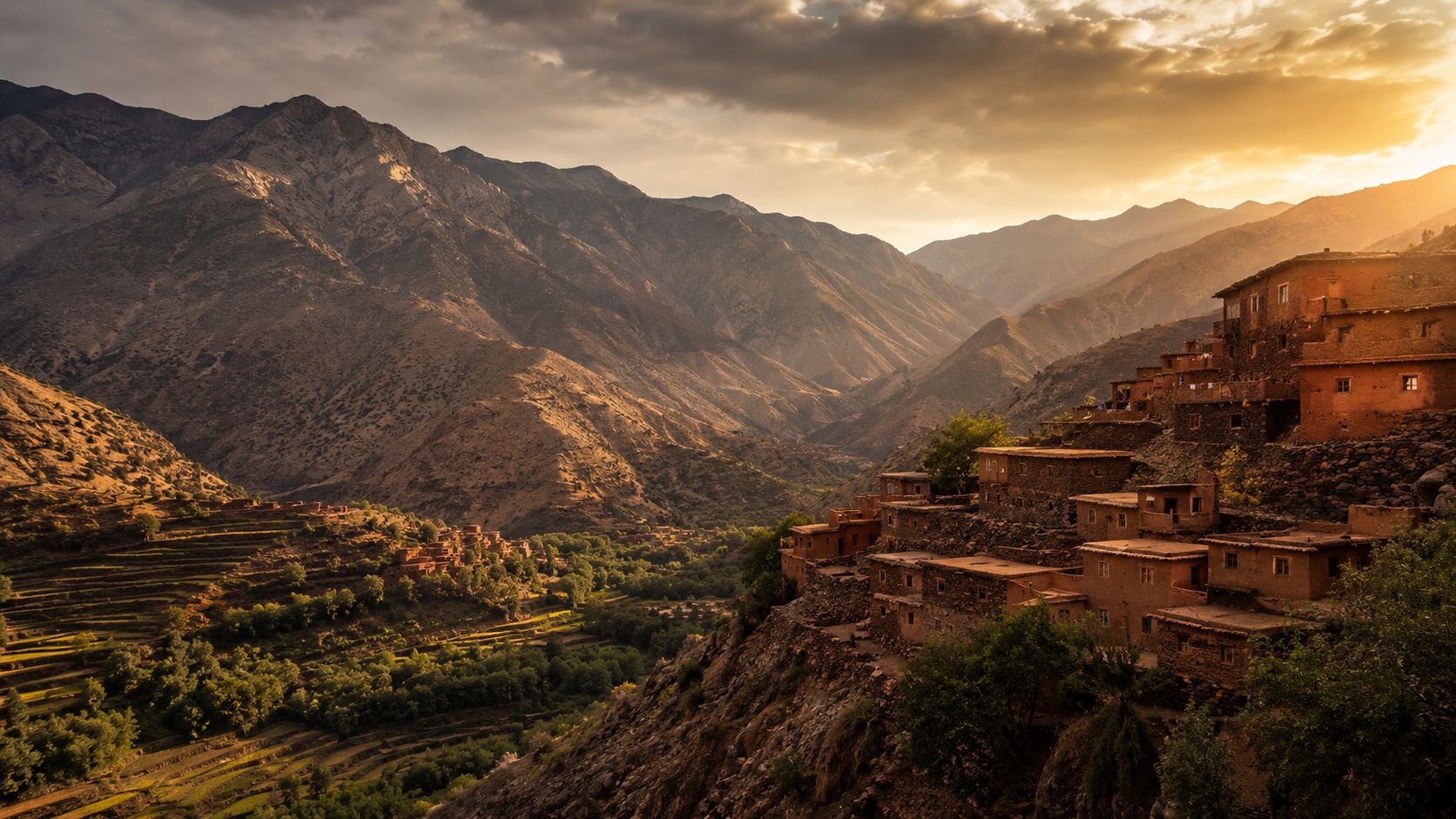
Rising like a colossal spine across northwestern Africa, the Atlas Mountains are among the most dramatic and culturally rich mountain systems on Earth. Stretching across Morocco, Algeria, and Tunisia, these rugged highlands form the geological and emotional heart of Morocco, where snow-capped peaks tower above red deserts, ancient kasbahs cling to cliffsides, and remote Berber villages preserve traditions that have endured for centuries. The Atlas Mountains are not simply a physical landscape. They are a living crossroads of history, climate, culture, trade, and survival. For travelers, the mountains represent adventure and discovery. For geologists, they reveal a fascinating story of tectonic collisions and evolving terrain. For local communities, they remain a source of identity, agriculture, spirituality, and resilience. Whether viewed from the bustling streets of Marrakesh or from a lonely mountain pass at sunrise, the Atlas Mountains possess a magnetic presence that defines much of Morocco’s national character.
A Colossal Mountain System Forged by Time
The Atlas Mountains were formed over millions of years through immense tectonic forces caused by the collision of the African and Eurasian plates. Unlike the jagged volcanic chains seen elsewhere in the world, the Atlas range emerged through uplift and compression, gradually creating a vast system of ridges, plateaus, valleys, and towering peaks that now dominate much of Morocco’s geography.
The range is commonly divided into three major sections within Morocco: the High Atlas, Middle Atlas, and Anti-Atlas. Each possesses its own climate, scenery, ecosystems, and cultural atmosphere. The High Atlas contains the tallest and most iconic peaks, including the mighty Mount Toubkal, which rises to over 13,600 feet and stands as the highest mountain in North Africa. During winter, snow blankets these elevations, creating alpine landscapes that feel worlds away from the nearby Sahara Desert.
The Middle Atlas features cedar forests, rolling hills, fertile valleys, and cooler climates that support abundant wildlife and farming communities. In contrast, the Anti-Atlas appears older and more weathered, with dramatic rock formations, arid plateaus, and landscapes sculpted by centuries of erosion.
This immense geological diversity creates one of the most visually varied regions in Africa. In a single journey, travelers may encounter icy summits, deep canyons, lush river valleys, terraced farms, and desert horizons glowing beneath orange sunsets.
The Berber Legacy Woven Into the Mountains
The Atlas Mountains are inseparable from the history and identity of Morocco’s Indigenous Amazigh people, often known internationally as the Berbers. For thousands of years, Amazigh communities have inhabited these remote highlands, adapting to difficult terrain while preserving unique languages, architecture, music, and traditions.
Mountain villages constructed from clay, stone, and mud brick blend naturally into the surrounding landscape. These settlements often appear almost hidden against the slopes, their earthy colors matching the mountains themselves. Narrow pathways wind between homes, while terraced farms carve patterns into steep hillsides where families grow barley, wheat, almonds, walnuts, and olives.
Hospitality remains one of the defining characteristics of Atlas Mountain culture. Visitors are frequently welcomed with mint tea, warm bread, and traditional tagines prepared over open fires. Despite modernization reaching many parts of Morocco, numerous mountain communities still maintain lifestyles deeply connected to seasonal rhythms, agriculture, and communal cooperation.
The architecture of the Atlas region also reflects centuries of adaptation and defense. Ancient kasbahs and fortified granaries stand atop ridges and valleys, built to protect both trade routes and food supplies. These structures reveal how strategically important the mountains once were during periods of regional conflict and caravan trade.
Perhaps most remarkable is the endurance of Amazigh cultural identity itself. Traditional music, weaving, storytelling, and language continue to thrive throughout the Atlas region, offering a living connection to Morocco’s ancient past.
Landscapes of Extremes and Untamed Beauty
Few places in the world present contrasts as dramatic as those found in the Atlas Mountains. Towering snowy peaks overlook scorching desert plains. Green river valleys cut through barren rock formations. Quiet cedar forests shelter wildlife beneath cliffs shaped by erosion and time.
One of the most breathtaking areas within the range is the Todra Gorge, where massive canyon walls rise hundreds of feet above narrow river passages. Nearby, the Dades Valley twists through surreal red rock landscapes lined with kasbahs and oasis villages. These valleys are especially vibrant during spring when flowers bloom and rivers swell with snowmelt from the peaks above.
Higher elevations within the High Atlas reveal alpine environments rarely associated with North Africa. Jagged ridgelines, glacier-carved valleys, and mountain lakes create scenery more reminiscent of Europe’s great mountain ranges. During winter, ski resorts even operate in parts of the Atlas, surprising many visitors who associate Morocco exclusively with desert climates.
Farther south, the mountains gradually transition into the vast edges of the Sahara. Here, rocky plateaus and dry canyons dominate the horizon, producing cinematic scenery that has inspired countless photographers, filmmakers, and adventurers.
The changing light throughout the day adds another dimension to the Atlas landscape. Dawn paints the peaks with soft gold and pink hues, while sunsets ignite the mountains in deep reds and oranges. At night, remote valleys reveal star-filled skies untouched by urban light pollution.
Wildlife Hidden Among the Peaks
Despite harsh conditions in many regions, the Atlas Mountains support a surprisingly diverse collection of ecosystems and wildlife species. Elevation changes create a wide variety of habitats ranging from cedar forests and wetlands to rocky alpine slopes and dry shrublands.
Among the most famous residents of the region is the endangered Barbary macaque, one of the few primate species found north of the Sahara. These monkeys inhabit cedar forests in the Middle Atlas, where they forage among ancient trees and cool mountain terrain. The forests themselves represent an ecological treasure, helping regulate water systems and prevent soil erosion across surrounding regions.
Birdlife flourishes throughout the mountains as well. Eagles soar above cliffs while migratory species pass through valleys during seasonal journeys between Europe and Africa. In more remote areas, elusive mammals such as wild boars, foxes, and mountain cats continue to survive within isolated habitats.
The mountains also serve as vital water towers for Morocco. Snowfall and rainfall captured at high elevations feed rivers, reservoirs, and agricultural zones across the country. Without the Atlas Mountains, many fertile regions of Morocco would struggle to sustain farming and human settlement.
Climate change, however, poses growing challenges to these ecosystems. Rising temperatures, changing rainfall patterns, deforestation, and increasing pressure from development threaten delicate environmental balances that have existed for centuries. Conservation efforts now focus heavily on protecting forests, wildlife habitats, and sustainable water management throughout the region.
The Atlas Mountains as a Gateway for Adventure
For outdoor enthusiasts, the Atlas Mountains offer some of the most rewarding adventures in Africa. Trekking routes weave through valleys, villages, and mountain passes that reveal Morocco’s raw beauty far beyond the crowded tourist centers.
The ascent of Mount Toubkal has become one of the continent’s most famous trekking experiences. Climbers from around the world travel to Morocco to reach the summit, often beginning their journey in the village of Imlil before ascending through rocky terrain and mountain refuges. Although technically achievable for many hikers, the climb still demands endurance and preparation due to altitude and rapidly changing weather conditions.
Beyond Toubkal, the Atlas range contains endless opportunities for exploration. Multi-day trekking circuits lead travelers through remote Amazigh villages where traditional lifestyles remain largely unchanged. Mountain biking, rock climbing, canyon exploration, and trail running have also grown increasingly popular throughout the region.
Winter transforms portions of the High Atlas into snow sports destinations. Ski resorts such as those near Oukaïmeden attract visitors seeking a uniquely African alpine experience. While smaller than European resorts, these areas provide rare opportunities to ski while surrounded by dramatic desert-influenced landscapes.
Adventure in the Atlas Mountains is not limited to physical activity alone. Many travelers seek cultural immersion through homestays, local cooking experiences, traditional craft workshops, and guided journeys into isolated valleys rarely visited by mass tourism.
What makes the Atlas experience especially powerful is the combination of physical beauty and human connection. The mountains challenge travelers while simultaneously welcoming them into deeply rooted communities filled with warmth and tradition.
Ancient Trade Routes and Strategic Importance
Long before modern roads crossed the mountains, the Atlas range played a critical role in trade, defense, and cultural exchange throughout North Africa. Caravan routes once passed through mountain valleys carrying gold, salt, spices, textiles, and other valuable goods between sub-Saharan Africa and Mediterranean markets.
Mountain passes served as gateways between Morocco’s interior cities and the Sahara Desert. Merchants, travelers, scholars, and armies all depended on these routes to navigate the difficult terrain. As a result, fortified villages and kasbahs emerged in strategic locations to protect commerce and monitor movement through the valleys.
The famous Aït Benhaddou stands as one of the best-preserved examples of this architectural heritage. Its striking earthen structures rise above desert plains near the Atlas foothills, reflecting centuries of caravan trade and defensive planning. Today, it remains one of Morocco’s most iconic historical sites and has appeared in numerous international films and television productions.
The mountains also historically provided refuge during periods of invasion and political instability. Their rugged terrain allowed local communities to preserve cultural independence and resist outside control for generations. This sense of resilience still shapes the spirit of many Atlas communities today.
Modern infrastructure has made portions of the mountains far more accessible, yet many valleys remain remote and isolated. In these quieter regions, echoes of ancient caravan life still linger in the architecture, oral traditions, and rhythms of daily existence.
Morocco’s Rugged Soul and Timeless Frontier
The Atlas Mountains are more than a natural landmark. They are the rugged soul of Morocco itself. Their peaks, valleys, and villages contain stories that stretch back thousands of years, connecting geology, culture, trade, survival, and beauty into one extraordinary landscape. To stand within the Atlas range is to witness contrasts that feel almost mythical. Snow and desert exist within sight of one another. Ancient traditions survive beside modern tourism. Silence fills remote valleys while vibrant marketplaces thrive at mountain crossroads. Every ridge and canyon carries a sense of timelessness shaped by nature and human endurance alike. For Morocco, the mountains remain a source of identity and life. Rivers flowing from the peaks nourish farms and cities. Tourism supports countless communities. Ancient Amazigh heritage continues to shape national culture. Even the visual image of Morocco itself is inseparable from the dramatic silhouettes of the Atlas on the horizon. As global travel grows increasingly fast-paced and commercialized, the Atlas Mountains still offer something rare: authenticity. The landscapes remain wild. The villages remain deeply rooted in tradition. The atmosphere retains a sense of discovery that has vanished from many parts of the world. Whether approached as an adventurer, historian, photographer, or curious traveler, the Atlas Mountains leave a lasting impression. They rise not only above Morocco’s terrain but also above imagination itself, forming one of the planet’s most unforgettable mountain realms.


