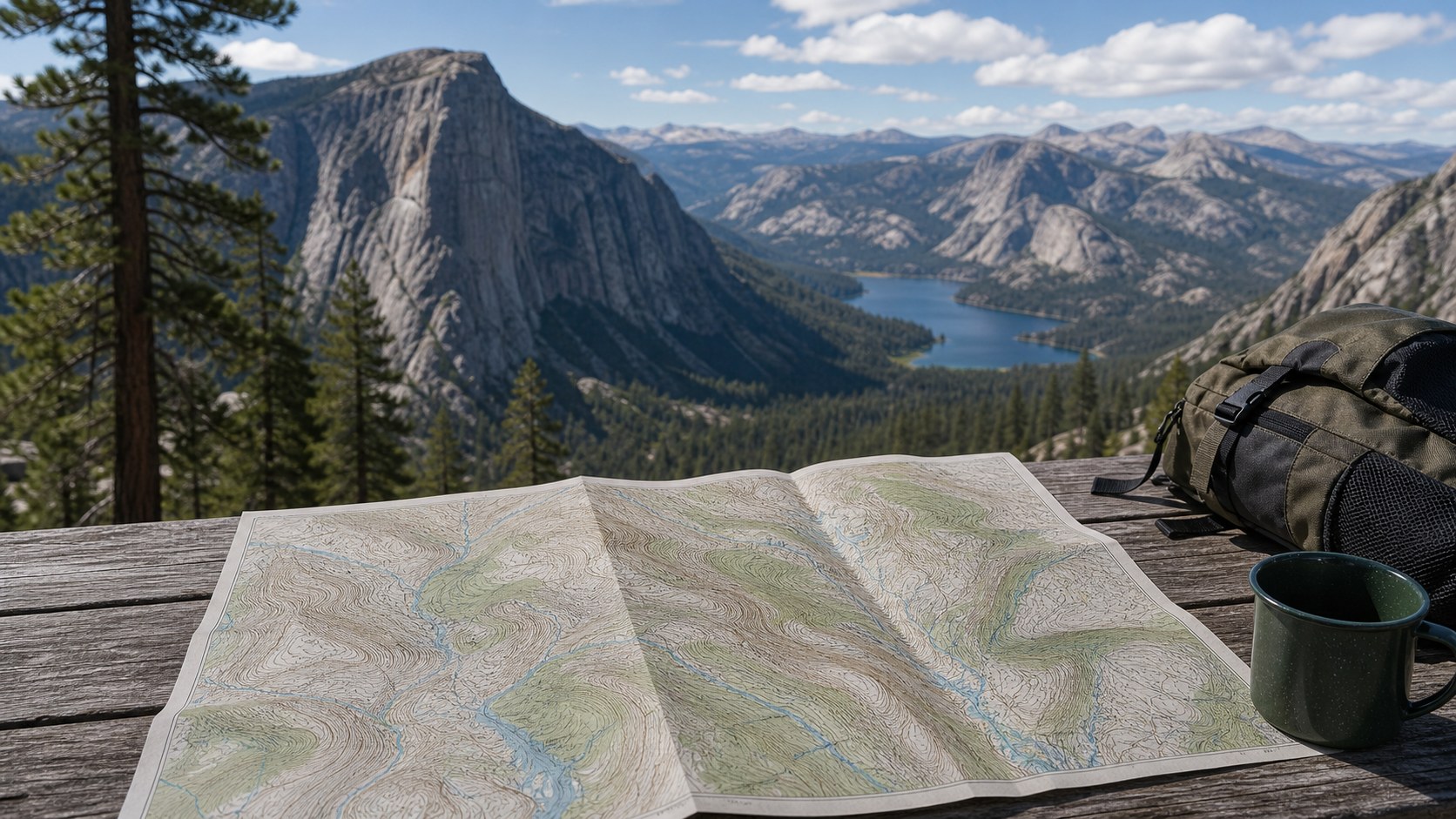
For centuries, humans have sought ways to capture the shape of the land. From hand-drawn sketches on parchment to the digital maps on our phones, the challenge has always been the same: how do you compress the vast, three-dimensional complexity of the Earth into a two-dimensional image? Among the many solutions devised, 2D topographic maps stand out as one of the most enduring and widely used. These maps, with their elegant contour lines, shaded reliefs, and labels, attempt to portray the heights and depths of terrain in a format that can be carried in a backpack or displayed on a screen. But how accurate are they, really? This question invites us to explore both the power and limitations of 2D topographic mapping, uncovering where they shine, where they fall short, and why accuracy is not as simple as it first seems.
The Science Behind Contours and Elevations
At the heart of every topographic map are contour lines, each representing a constant elevation above sea level. By following these lines, readers can trace the ridges of mountains, the slopes of valleys, and the meandering edges of plateaus. The spacing of these lines provides insight into terrain steepness, with close spacing signaling cliffs or steep slopes and wider spacing suggesting gentle plains.
But here’s where accuracy becomes nuanced. Contour intervals—whether set at 10 feet, 40 feet, or 100 feet—determine the resolution of the map. A 100-foot interval may gloss over subtle hills and ridges, while a 10-foot interval captures fine detail but risks overwhelming the reader. The science of elevation data, usually collected from field surveys, photogrammetry, or LiDAR, must then be simplified into these lines, a process that inevitably sacrifices some granularity for readability. Accuracy, therefore, is a balance between precision and usability.
Historical Roots and Their Legacy in Accuracy
The history of topographic mapping shapes the very question of accuracy. Early maps relied on painstaking ground surveys where teams used compasses, chains, and barometers to measure distance and elevation. While impressive for their time, these methods introduced errors from human observation, weather conditions, and measurement tools. As aerial photography developed in the 20th century, maps became more precise, allowing for consistent elevation models over vast landscapes. Today, satellite-based systems and laser-based LiDAR scans can achieve elevation measurements accurate to within centimeters. Yet, even with these advancements, many widely used 2D topographic maps are based on older datasets. For example, some USGS topographic maps still rely on aerial surveys from decades ago. This means that while the representation may look precise, the underlying data may lag behind modern reality. Historical legacy plays an important role in determining the true accuracy of a map sitting in someone’s hands.
Common Sources of Error in 2D Maps
Despite technological progress, no 2D topographic map can claim perfect accuracy. The errors that creep into these maps come from multiple sources. Generalization, where cartographers simplify terrain to prevent visual clutter, can omit small but important features such as gullies, boulders, or man-made structures. Projection distortions, which occur when converting the curved surface of the Earth to a flat sheet, can skew distances and angles, especially in large-scale regional maps. Human interpretation also matters—whether through mislabeling, misplaced contour lines, or outdated landmarks, small mistakes can spread across editions of maps. Even natural processes undermine accuracy: rivers shift their courses, landslides reshape slopes, and glaciers retreat, leaving older maps instantly outdated. Together, these errors remind us that every 2D topographic map is a model—a helpful but imperfect approximation of the real landscape.
Accuracy in Practice: Hiking, Engineering, and Science
The importance of accuracy depends heavily on how the map is used. For hikers and outdoor adventurers, a 2D topographic map is typically accurate enough for navigation, showing trails, ridges, streams, and elevation changes that guide safe passage. A misplaced contour line by a few feet rarely endangers a trekker. For engineers designing highways, dams, or pipelines, however, accuracy must reach far beyond what a standard topo map provides.
They often require detailed surveys or 3D elevation models to calculate slopes, volumes, and drainage patterns with precision. Scientists studying ecosystems or climate change also depend on fine-resolution data to model soil erosion, vegetation patterns, or flood risks. Here, 2D maps serve more as a starting point than a final authority. The measure of “accuracy” is therefore relative—sufficient for general navigation, but often inadequate for tasks demanding engineering-grade precision.
Comparing 2D Maps with Digital 3D Models
The rise of digital mapping technology has transformed the conversation about accuracy. Geographic Information Systems (GIS), high-resolution DEMs, and 3D terrain visualization tools now allow users to virtually fly over landscapes, rotate perspectives, and analyze data in ways that flat 2D maps never could. These tools often reveal the limitations of traditional topographic maps. A 2D contour map may show a ridge, but a 3D digital model highlights its sharpness, vegetation cover, and relationship to surrounding terrain. Yet 2D maps retain their value. They are lightweight, portable, and universally readable, requiring no electricity or specialized software. They distill the complexity of 3D terrain into a form that the human eye and brain can quickly process. When comparing the two, accuracy in 3D may surpass that of 2D, but usability and accessibility keep 2D maps relevant even in a digital-first age.
The Future of Accuracy in Topographic Mapping
As technology advances, the accuracy of topographic maps will continue to improve, but perhaps not always in the traditional 2D format. LiDAR-equipped drones are already revolutionizing terrain mapping by capturing fine detail in inaccessible areas. Cloud-based GIS platforms provide continuous updates, reducing the problem of outdated data. Artificial intelligence can automatically detect and correct map errors by comparing multiple datasets.
For printed maps, these advances mean that the next generation of 2D topographic maps may reflect real-time landscapes with unprecedented fidelity. However, accuracy must still be weighed against readability and purpose. A map overloaded with detail becomes unusable, no matter how precise. The future of topographic mapping, then, will likely rest in hybrid approaches—2D maps for simplicity and portability, supplemented by digital models for high-accuracy analysis.
Rethinking Accuracy as Interpretation, Not Perfection
Ultimately, asking how accurate 2D topographic maps are invites us to rethink what accuracy means in cartography. No flat sheet of paper can capture the full depth, texture, and dynamism of Earth’s surface. Instead, accuracy should be seen as fit-for-purpose. A hiker’s map, an engineer’s blueprint, and a scientist’s model all demand different thresholds of precision. 2D topographic maps, with their graceful contours and enduring utility, strike a balance between simplification and detail that has stood the test of time. While they will never rival the centimeter-level precision of LiDAR scans or the immersive realism of 3D models, they remain an accessible, dependable, and surprisingly effective way of translating landscapes into a human-readable form. Accuracy, in this light, is less about perfection and more about meaningful interpretation—a reminder that maps are as much about storytelling as they are about measurement.